Why the Best RF Design Removes the Problem Entirely
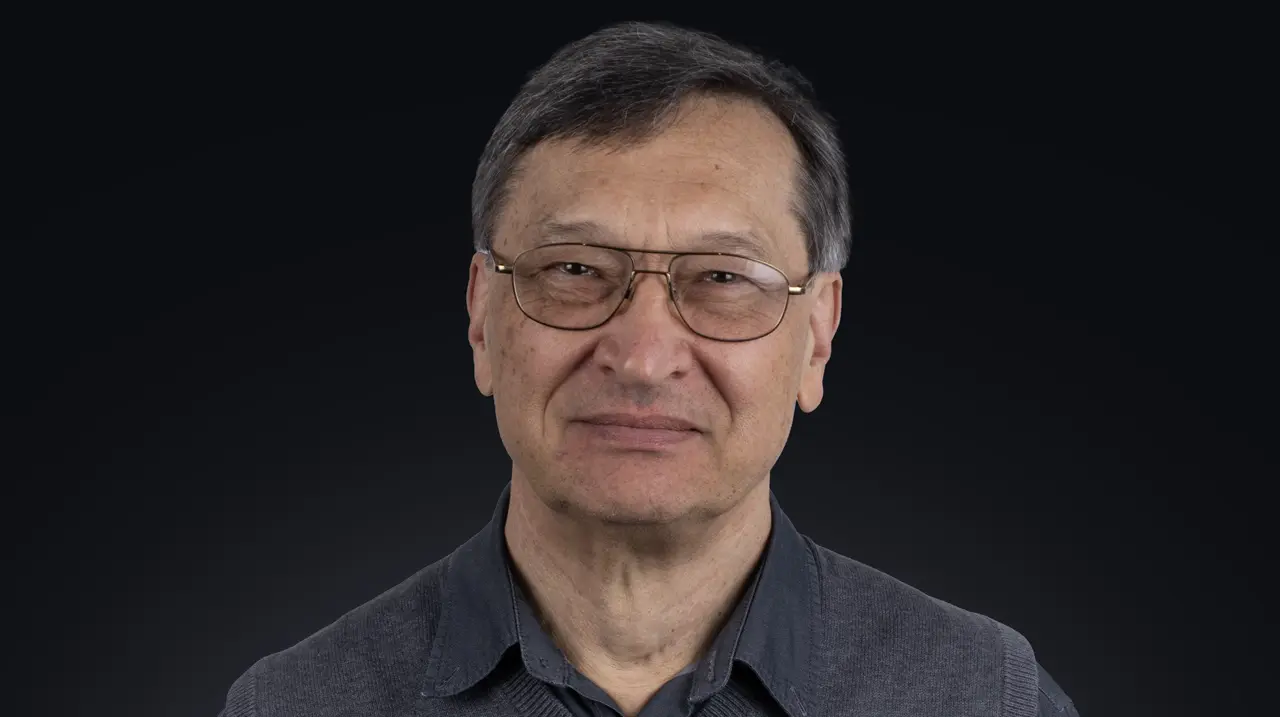
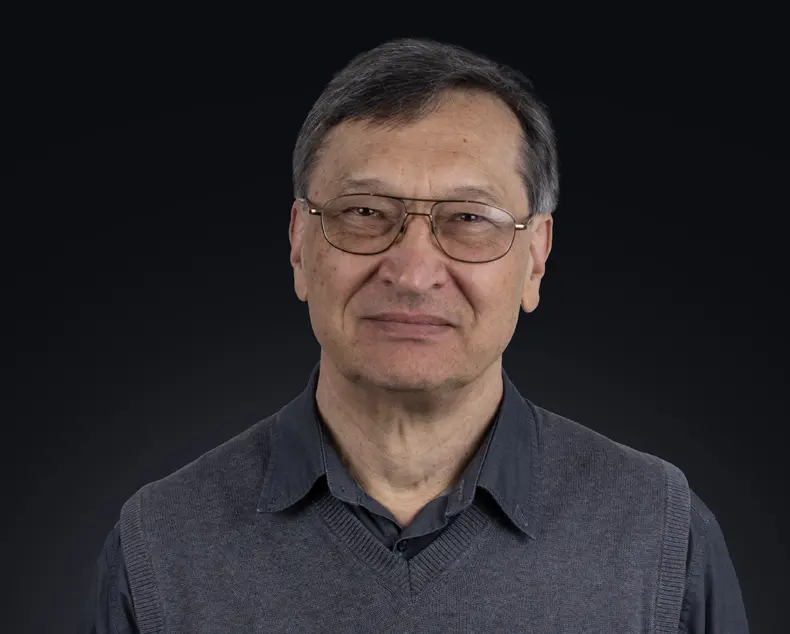
Meet Vlad Lenive, Lead RF Systems Engineer, bringing over three decades of experience in the design of advanced RF and electromagnetic systems. He is applying this experience within Plextek to solve complex RF challenges, drive innovation across SATCOM and HAPS systems, and contribute to the development of highly integrated, efficient, next-generation technologies.
Hi Vlad, can you tell us about your role at Plextek?
Of course, my day-to-day work sits somewhere between system architect and hands-on RF engineer. This means I’m typically moving between defining system architectures, running EM and circuit simulations, and then validating ideas in the lab. A key part of the role is translating high-level requirements, which are often quite loosely defined, into something physically real and testable. That includes link budgets, antenna concepts, beamforming strategies, and the practicalities of implementation.
What I most enjoy is the variety and the problem-solving the job brings. No two projects are the same, and often the interesting part is not just solving a problem, but figuring out what the real problem actually is. I’ve loved getting to know the team here: Plextek brings together people with deep expertise across RF, digital, and systems engineering, so there’s a lot of constructive challenge and cross-pollination of ideas, which tends to lead to better solutions.
Over 30 years, you’ve worked across space-qualified payload hardware, SATCOM transceivers, phased arrays, and beamforming for cellular infrastructure. What’s the thread that connects all of that?
Great question! At first glance, space payloads, SATCOM terminals, phased arrays, and cellular infrastructure might look like very different domains, but the common thread is electromagnetic control of RF energy, from first principles through to deployed systems.
Across my career, I’ve consistently worked at that interface between theory and hardware. This has meant taking quite fundamental electromagnetic ideas and turning them into manufacturable, reliable systems. That might be a satellite payload filter network, a phased array architecture, or an integrated RF transceiver, but the underlying challenge is always the same: how to shape fields, manage losses, and deliver performance under real constraints. A good example is the progression from classical waveguide work, such as developing “exact” filter and diplexer design techniques that remove the need for tuning, through to more integrated concepts like phased array architectures and “filtenna”, where RF, antenna, and filtering functions are increasingly combined.
Can you tell us some of the projects and applications you’ve worked on in the past?
Where to start… A lot of my projects have revolved around advanced SATCOM and high-frequency systems. That includes things like Q-band and L-band broadband data links for HAPS platforms, as well as Ku- and Ka-band electronically scanning terminals, where I worked on beam-steering approaches and overall RF architectures. I’ve also worked on multi-band naval SATCOM tracking antenna feeds and dual-band beamformers for more specialised antenna concepts.
Alongside that, there’s been a strong focus on phased arrays and emerging high-frequency technologies. That ranges from L- and X-band microwave links, 5G RF front-end modules with integrated phased arrays and silicon beamformer ICs, through to more experimental work like sub-THz scanning arrays and lenses operating at 300 GHz and potentially up to 700 GHz.
I’ve also spent time on highly integrated and consumer-focused RF systems, including NFC comms, Wi-Fi transceivers with on-silicon inductors and VCO tanks, DAB/FM modules for high-volume products, calibration algorithms for RF front-end and time accurate AGC behavioural modelling. Those projects come with very different constraints, particularly around cost, silicon area, process corners, packaging techniques, reliability and manufacturability.
Running through all of this is a consistent thread of innovation. That includes work on multi-polarised signal processing techniques, as well as “filtenna” concepts, where antenna and filtering functions are combined into a single structure. I’ve also done a lot of work on waveguide filters and diplexers using “exact” electromagnetic design methods, where performance is achieved through modelling accuracy rather than post-build tuning.
You’ve contributed to programmes like Skynet 5, Galileo, Anik WAAS, SICRAL. What kind of RF work were you doing on those, and what makes designing for space different from terrestrial systems?
On programmes like Skynet 5, Galileo, and Anik WAAS, I worked across the RF payload chain, antennas, beamforming networks, multiplexers, channel filters, switching, and calibration components. A lot of the work involved high-performance passive structures for space applications. So, working with filters, diplexers, and multiplexing networks, where loss, power handling, and thermal stability are critical.
However, space design is fundamentally different from terrestrial systems. There’s no access for repair, there are strict mass and volume constraints, extensive verification and modelling requirements and due to high-power RF breakdown in vacuum, there are always concerns of multipactor effect and corona breakdown prevention. This is where rigorous EM design becomes essential. Techniques like those used in “exact” waveguide filter design, where performance is driven by modelling accuracy rather than post-build tuning, are particularly valuable in space applications.
Of all your projects, which were the hardest technical challenges, and how did you solve them?
One recurring challenge throughout my career has been managing unintended coupling and interactions in highly integrated RF systems. For example, in CMOS combo chips containing more than one transceiver, we encountered LO pulling effects caused by the interaction between the PAs and VCOs. Initially, it looked like a circuit issue, but the root cause was a combination of electromagnetic coupling, layout effects, and process limitations.
The solution required stepping back and treating it as a full EM + circuit + process problem. So, we improved isolation structures and on-silicon shielding, revised matching networks, and ensured the system’s better alignment with fabrication constraints. Interestingly, once properly understood, the fix was relatively simple, but getting there required reframing the problem!
HAPS is generating a lot of interest as a platform. What are the unique RF and systems engineering challenges compared to satellite or ground-based systems?
HAPS sits in a unique regime between satellites and terrestrial systems, and that creates several challenges. From a link perspective, you’re dealing with long distances like satellite systems, but without the same level of predictability. Atmospheric effects still play a role, so maintaining a robust link isn’t straightforward. At the same time, the antenna requirements are quite demanding. You need high gain and beam steering, often with tight pointing accuracy, but within much tighter size, weight, and power constraints.
Thermal management is another challenge. At altitude, you don’t have the same cooling options you’d rely on in terrestrial systems, so you have to be much more deliberate in how the system is designed. And unlike GEO satellites, these platforms aren’t stationary, so tracking and beam control become more dynamic problems. In practice, the hardest part isn’t any one of these in isolation. It’s balancing all of them at a system level. You’re constantly trading off performance, power consumption, and platform constraints, while still needing to deliver a reliable, high-performance link.
Low SWaP is central to what Plextek does. Where on a HAPS or SATCOM system can tight RF and payload design make the biggest difference, and what does that look like in practice?
The biggest gains tend to come from how well you integrate and simplify the RF chain. Traditional architectures often treat antennas, filtering, and beamforming as separate blocks. By combining those functions, for example, through “filtenna” concepts, you can reduce both size and loss.
There are also clear benefits in how you handle signal distribution. Reducing losses in beamforming networks, multiport combiners, or using more integrated beamformer ICs can significantly improve efficiency and footprint. Ultimately, it comes down to using electromagnetic design intelligently. If performance comes from the geometry itself rather than added components, the whole system becomes simpler. In practice, the best RF design doesn’t just make things smaller; it removes the need for entire parts of the system altogether, and that’s where the biggest SWaP gains are made.
Finally, what are your hobbies outside of work? How do you unwind?
Outside of work, I tend to like doing anything hands-on or mentally engaging. When I’m at home, I really value being able to switch off by doing anything practical or physical activities. I enjoy building and experimenting with technical ideas, and you can often find me exploring concepts that don’t quite fit into day-to-day project work. One thing the readers won’t know is that I also have a strong interest in ballroom dancing! This is a completely different kind of challenge to my day-to-day work. I love it! The precision, timing, and coordination… it’s a great counterbalance to engineering work.
Let’s talk
Need deep RF expertise on your next project? Talk to us about how engineers like Vlad can extend your team!