Winning the Invisible War: The Rise of Electronic Warfare


Written by Prof Aled Catherall
Chief Technical Officer
Winning the Invisible War: The Rise of Electronic Warfare
Modern warfare has moved beyond platform dominance. Control of the sea and air remains essential but is no longer sufficient. Advantage now depends on the ability to create, share, and exploit information at speed. Integrated systems that combine sensing, analysis, and command and control enable faster decisions and more effective use of constrained resources.
The UK Ministry of Defence’s ASGARD programme exemplifies this shift in the land domain. It contributes to a wider Digital Targeting Web by linking sensing, decision-making, and effects within a coherent, data-driven architecture. This integration enables more timely and better-informed decisions.
All of this depends on the ability to move information reliably and at pace. The electromagnetic spectrum provides the primary medium for that flow and, as a result, forms a decisive domain in modern conflict. Electronic Warfare (EW) shapes that battlespace by both disrupting adversary information flows and exploiting emissions to detect, locate, and track forces. Military advantage now depends not on scale alone, but on how effectively a force can sense, process, and act on electromagnetic information.
EW as a Contested Domain
Electronic Warfare is now recognised as not only a critical component of modern conflict, but also a core military domain in its own right. The UK Government’s 2025 Strategic Defence Review states that the cyber and electromagnetic domain sits at the heart of modern warfare, integrating all others. This recognition reflects operational reality. State and non-state actors now contest the spectrum as a matter of routine.
Historically, EW has been the preserve of a small number of advanced militaries and specialised platforms. The rapid evolution of commercial radio technology, however, has lowered the barrier to entry. Affordable software-defined radios, open-source signal processing tools, and widely available data links allow a broader range of actors to deploy EW capabilities. This development increases both the density and the diversity of threats. Electromagnetic activity is now persistent, adaptive, and difficult to predict.
Despite this shift, much of the focus of military preparation remains on how to conduct EW offensively. Less attention is given to how forces continue to operate under sustained electromagnetic pressure from adversaries. That gap is increasingly exposed in conflict.
Operating in a Denied Environment
Modern operations are defined by environments where radio-based systems are denied, degraded, intermittent, and limited (DDIL). Communications, navigation, and sensing can no longer be assumed to function reliably, nor assumed to be trustworthy when they do appear to work. Adversaries routinely target global navigation satellite systems and tactical communications to disrupt command and control and degrade situational awareness. Disruption ranges from simple jamming, through targeted pollution of the EM spectrum with energy, through to advanced techniques to deceive and spoof.
The conflict in Ukraine illustrates these conditions. Both sides employ electronic support to detect and locate emitters, and electronic attack to disrupt communications and navigation. These effects degrade command-and-control networks and situational awareness, slowing the tempo of decision-making and forcing adaptation across the chain of command. As communications become less reliable, forces face delays in sensing, decision-making, and effect delivery, increasing exposure to detection and targeting. At the same time, electronic support enables the interception, geolocation, and exploitation of radio emissions for targeting purposes.
These developments place new demands on force design. Concepts such as sense, decide, and effect from any sensor to any effector, as explored in allied programmes, require resilient links across distributed systems. In a DDIL environment, those links must tolerate disruption, reconfigure dynamically, and degrade gracefully.
Training for Spectrum Superiority
Training must reflect these realities. Historically, military training has replicated the physical environment. During the Cold War, the UK Ministry of Defence built training villages modelled on likely theatres of operation. During campaigns in Afghanistan, facilities evolved to replicate local conditions more closely.
The same principle now applies to the electromagnetic environment. Forces must train to operate, fight, and command when the spectrum is contested. This approach requires the simulation of realistic electromagnetic effects alongside physical scenarios.
Modern EW training environments combine instrumented ranges, scenario control systems, and reconfigurable emitters. These tools can replicate jamming, spoofing, and signal congestion. They also allow instructors to control the tempo and intensity of electromagnetic effects. Personnel can then practise maintaining communications discipline, managing emission control, and adapting tactics under degraded conditions.
Training also supports equipment development. Radios, sensors, and autonomous systems must be designed for resilience. Training with equipment in a contested EW environment provides an opportunity to understand their vulnerabilities early and inform development programmes to mitigate them.
Our Approach
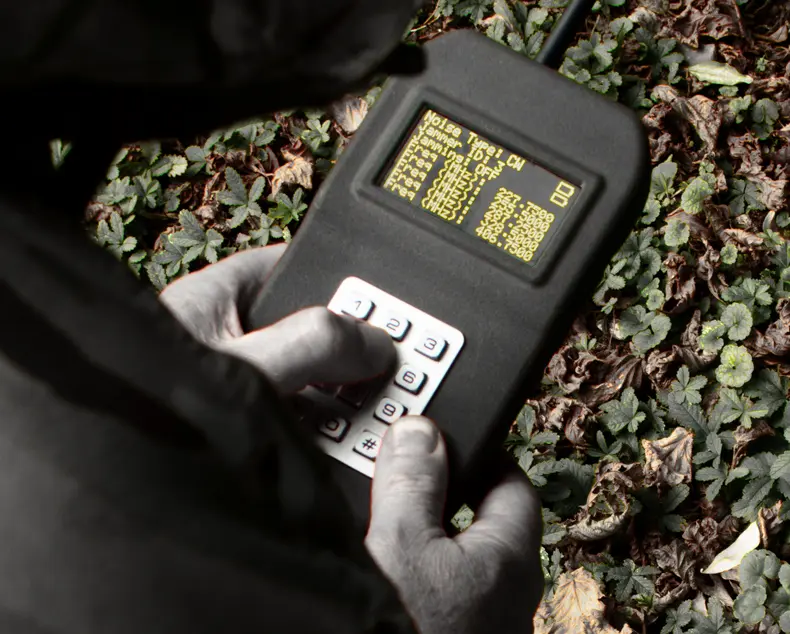
Plextek is focused on enabling realistic EW training at scale. The company is developing low power jamming systems that can be deployed organically within training units. These systems can be carried by personnel and controlled remotely by training staff. Instructors can introduce controlled electromagnetic effects without large infrastructure or safety risks.
This approach allows units to experience contested spectrum conditions in routine training. Personnel can learn how to maintain mission effectiveness when communications are degraded, navigation is unreliable, and adversaries exploit emissions. The aim is not only to develop EW specialists, but to ensure that all personnel can operate effectively in the electromagnetic domain, and that limitations of equipment are understood early to enable mitigations to be developed.
Achieving Spectrum Superiority
Spectrum superiority depends on more than technical capability. It requires an integrated approach across doctrine, training, and equipment. Forces must be able to sense the spectrum, understand activity within it, and act decisively to exploit or deny it.
This approach includes persistent sensing, robust and adaptable communications, and the ability to target adversary emissions. It also requires disciplined spectrum management and an understanding of electromagnetic risk at all levels of command.
The electromagnetic spectrum is now a domain in its own right. Success depends on the ability to operate within it under pressure and deny its use to adversaries. Training that reflects contested conditions is a necessary step towards achieving that advantage.
Your personnel need to train the way they’ll fight.
If your training doesn’t reflect a contested electromagnetic environment, we can help change that. Talk to the Plextek team today.