Designing sensing technology for space

Written by Richard Jacklin
Commercial Lead – Space & Satellite
Designing sensing technology for space
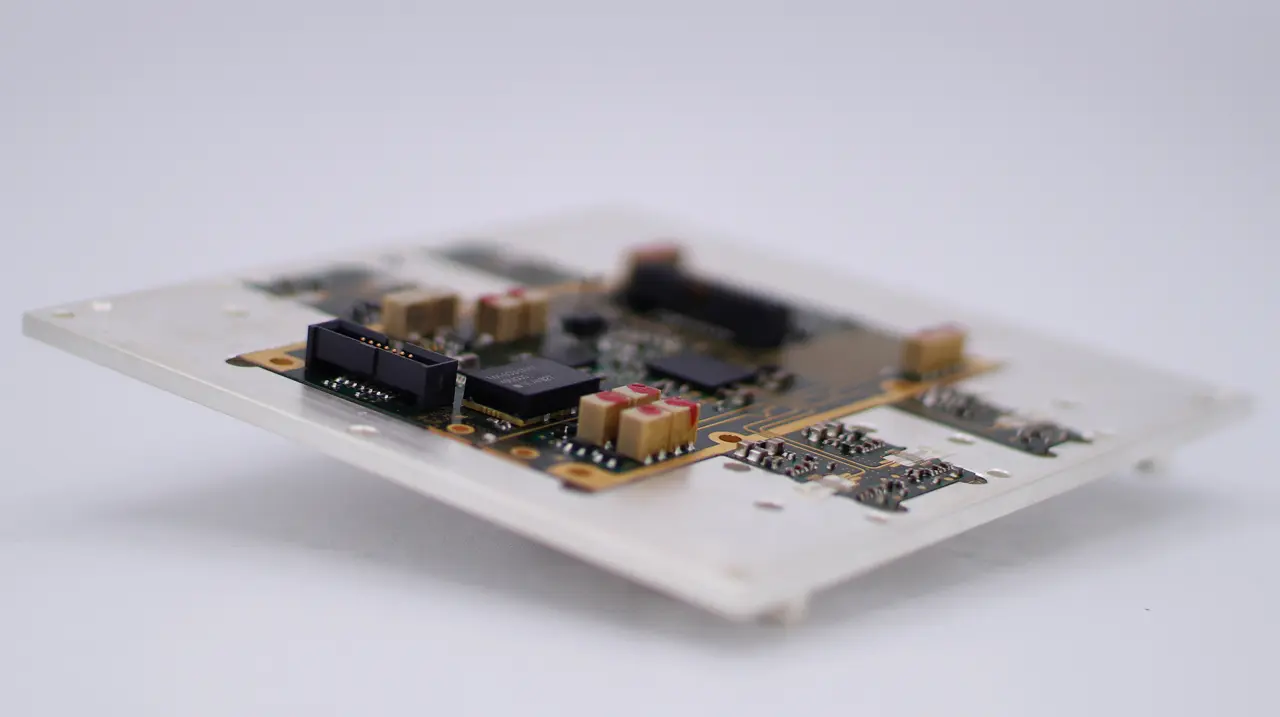
Having a good radar is all very well, but it also needs to work reliably and autonomously in the challenging conditions of space. If things go wrong, there is no nearby mechanic to pop over and fix it. There are a number of considerations, but the main ones are protection from radiation and heat removal.
Radiation
In space, there is no protective atmosphere, so components are exposed to ionizing radiation both from the Sun and from outside the Solar System. This takes two forms: total ionizing dose (TID) and single event effects (SIE). The background TID accumulates over time and can gradually degrade performance of electronics, similar to how long exposure to the Sun damages the skin. With electronics this is due to changes in the arrangement of atoms in the crystal lattice of the device. SEE involves high-energy charged particles striking an electronic component, causing transient currents and charges. In precision electronics like semiconductors or memory storage, this can cause errors in processing, calculations or timing that the radar relies on, whilst the induced currents can cause permanent damage to the electronics.
The inherent low voltages of mmWave radar, when paired with careful electronic design, help minimize the risk of system lock-up when a high energy charged particle causes a surge in current. However, these measures do not eliminate the possibility, so additional protective systems are needed, which include mechanisms for excessive current.
Physical shielding helps prevent radiation reaching the electronics. Aluminium is a good material for lightweight shielding, stopping all low to mid-energy charged particles. Weight can be saved by shielding only the most sensitive components or shielding one side, then controlling the craft orientation so that side always faces the Sun.
So-called RAD-hardened components are designed for high radiation environments but can cost 10-1000x more than non-hardened components and are often a little behind the cutting edge by the time they have completed certification. Again, there are trade-offs, how much hardening you need depends on the mission and risk profile.
No amount of hardening eliminates all risks, so protection must also be built in through resiliency systems. These can be components that detect problems and correct them or reset the system. For example, Error Correction Code stores backup information which it can cross reference with the main memory, and correct simple errors, or detect more complicated ones to trigger higher-level responses. Similar approaches of using multiple or backup systems can be used across most components.
Heat
The other big issue is heat. Electronics create heat which needs to be removed, or they will fail. On Earth, heat can be convected away by the air – but there is no air in space. Spacecraft must radiate heat away using specialized materials that absorb heat from surrounding objects and release it as infrared radiation. These need careful selection and integration to maximize heat removal whilst keeping size and weight down.
Practical considerations
Integration
Once we are happy that the solution is fit for purpose, questions might turn to the practicalities of deployment. A first might ask whether it integrates. Any system should come with emulators so it can be simulated within the rest of the spacecraft, ensuring it works and can communicate with the rest of the system before any field testing. If this sounds obvious, consider the fate of the 1999 Mars Climate Orbiter which missed its planned orbit because one component supplier used imperial units and another used metric.
Scalability
Companies with eyes on the long term business potential of space may also be starting to think about scalability. This may not be a concern for one-off missions, but companies that plan to launch lots of satellites over the coming decades, should start to consider the foundations of a sensing design that can scale as their business does. That means working with reliable suppliers of key components that can be customised for different missions, which are unlikely to be made redundant or face constant supply chain issues.
What to read next
This article covers how to keep sensing technology alive in space. But the choice of sensor matters just as much as how you protect it. Richard’s article looks at why mmWave radar hits the right balance of resolution, range and practicality for space applications, and where the real design trade-offs sit. mmWave radar: balancing resolution and practicality in space.
Considering sensing options for your space application?
We have direct experience designing sensing solutions for space, delivering the resolution and range performance missions need within tight constraints on size, mass, power, and cost.
- Talk to our team about your application.
Download our Technical Paper – Sensing in Space



Passive Radar for Detecting Aircraft Without Emitting
Passive radar aircraft detection without signal emission; solving direct path interference for silent, persistent air surveillance.
International Patent Grants for Pain Management Technology
Plextek engineers named as co-inventors on newly granted patents underpinning the first clinically validated, non-pharmaceutical wristband for chronic pain management
How technology transfer is reshaping sovereign security
From automotive to critical infrastructure, cross-sector technology transfer is reshaping our sovereign security
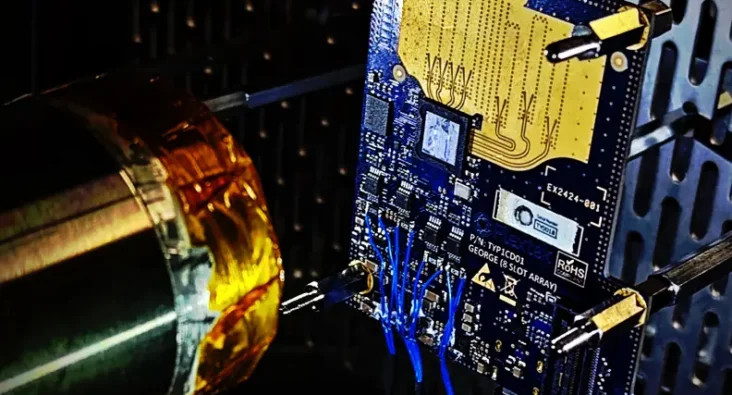
How Do You Radiation-Test a Complex IC?
Rigorous radiation characterisation is what makes the difference between a reliable device and one that fails unpredictably

Plextek Receives a King’s Award for Enterprise for Innovation 2026
Plextek has been honoured with a King's Award for Enterprise for Innovation
Why the Best RF Design Removes the Problem Entirely
Vlad Lenive, Lead RF Systems Engineer, brings 30 years of experience from Skynet 5 to sub-THz arrays. He talks HAPS, low-SWaP design, and why the best RF architectures eliminate components rather than shrink them.
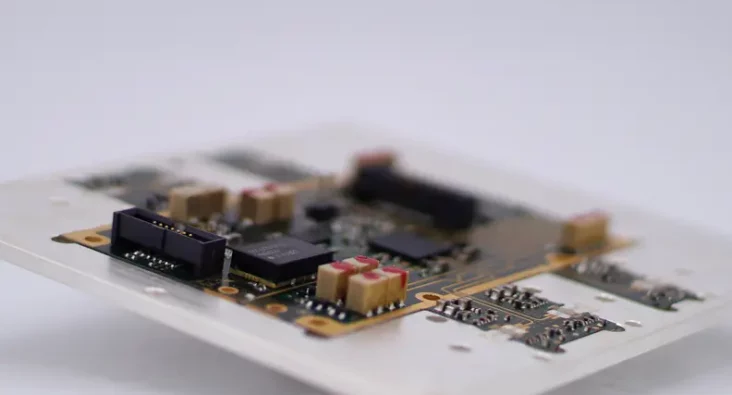
Designing sensing technology for space
Space radar has to survive radiation, shed heat without air, and work autonomously with no margin for error. Here's how the engineering trade-offs work.

Seeing Clearly in Orbit: The Turning Point for Space Radar
Richard Jacklin explores why 2026 is a turning point for compact radar in space, covering SAR, debris detection, 6G NTN communications and the UK skills gap.
Radar in Modern Sensing: The Power of Sensor Fusion
Radar Sensor Fusion with Cameras and Lidar: Enhanced Sensing Technology for Autonomous Systems

mmWave radar: balancing resolution and practicality in space
mmWave radar offers the ideal balance for space applications, detecting small debris and spacecraft features with minimal power and no moving parts.
Beyond policy: how industry must deliver ESA’s Zero Debris Vision
Space needs to be kept clean, and this is becoming increasingly hard as commercial and defence activities ramp up.

How radar works
How Does Radar Work? Understanding Radar Technology and Applications with Richard Jacklin