How Do You Radiation-Test a Complex IC?
How Do You Radiation-Test a Complex IC?
When a radiation-hardened component exists for your space-based electronics application, the path is relatively straightforward, when budget allows. But when your design calls for a complex mixed-signal integrated circuit (IC), one that combines signal processing, microprocessor, and analogue functions on a single die, radiation-hardened availability and characterisation becomes a different problem entirely. For us, these types of IC devices are a critical part within their small size, weight and power space-based radar modules.
Each functional block on a device like this can fail in different ways under radiation exposure. And those failure modes can interact. A single event effect in the signal processor may behave very differently from one in the analogue front end, and the mitigation strategy for each may be completely different. The question is not just “will this device survive in orbit?” but “how exactly will it misbehave, how often, and in which operating modes?”
In partnership with Radiation Analysis Services Ltd (RASL) the Plextek team completed a radiation characterisation campaign on a complex mixed-signal IC intended for use in Low Earth Orbit (LEO). This article describes the methodology and what made it technically challenging.
Planning the test
RASL led the test planning, producing a formal test plan that defined the test aims, the ions of interest, and the approach to data collection. The choice of ions matters: different ion species deliver different levels of Linear Energy Transfer (LET) to the device, and the test plan needs to cover a range wide enough to characterise the device’s response from low to high LET values.
But the test plan is only half the problem: the other half is making sure the data you collect is actually applicable to the way the device will be used in flight. For a simple memory or a power converter, this is manageable. For a complex mixed-signal device with multiple functional domains, it means exercising the device in each of its operating modes and monitoring the right parameters in each case. Getting that wrong means your test results don’t map to your real application, and your mitigation strategy is built on the wrong data.
Building the test bench
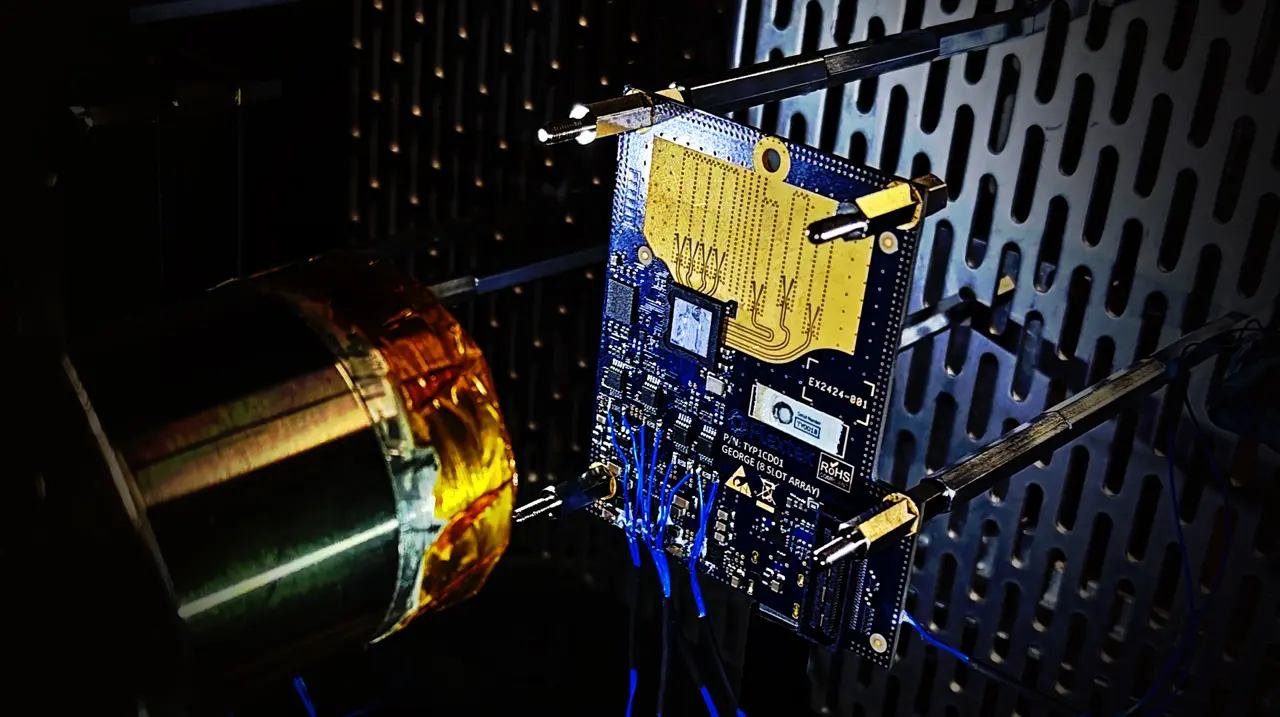
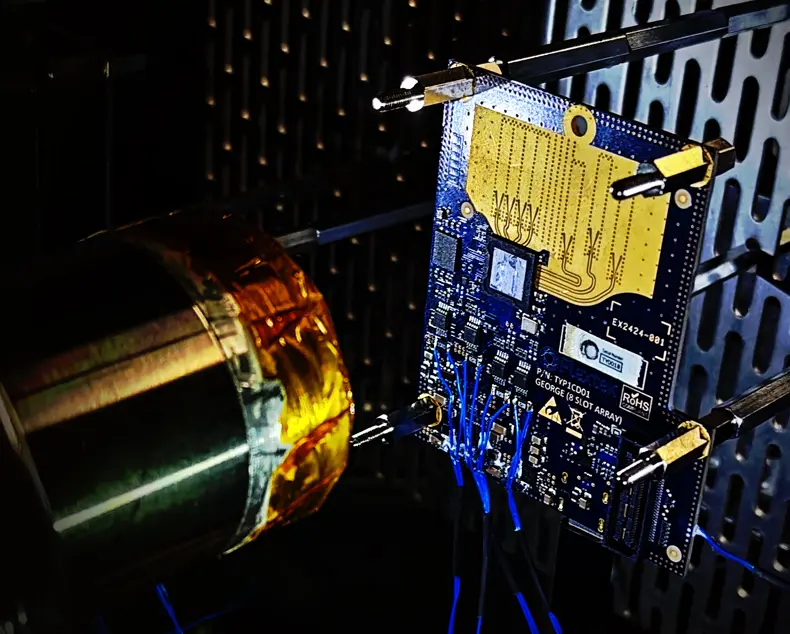
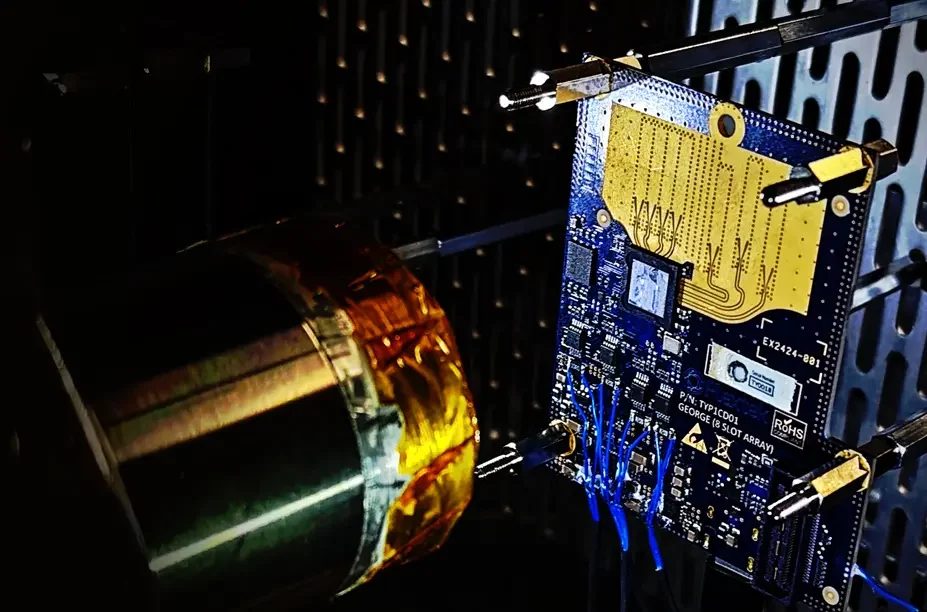
Plextek designed the test bench: a custom setup built around a development board that could exercise the device across its different operating modes while monitoring supply current draw and pulling diagnostic information from the device under test in real time.
Supply current monitoring is particularly important for detecting latch-up, a destructive single event effect where radiation causes a parasitic thyristor structure within the IC to turn on, drawing excessive current. Left undetected, latch-up can permanently damage the device. The test bench needed to catch these events quickly.
The test software was one of the more challenging elements. It had to cycle the device through its various functional modes, capture diagnostic data, and flag anomalies, all while running reliably in a test environment where the device under test is being bombarded with heavy ions and may behave unpredictably at any moment.
The test campaign at RADEF
Testing was carried out at the RADEF (RADiation Effects Facility) in Finland, a facility widely used for this type of characterisation work. RASL arranged access to the facility, ensured testing was conducted on delidded samples, and supported the test campaign.
Delidding removes the device’s package to expose the silicon die directly to the ion beam. Without it, the package material would stop or scatter the ions used during testing before they reach the active circuitry, with the aim of more closely replicating the energy levels which occur in space.
The test used a cocktail of ion species covering a wide range of LET levels. This spans the spectrum from relatively benign particle strikes through to high-energy events that occur less frequently in orbit but can cause serious disruption or damage.
The devices were tested at elevated temperature and with raised supply voltages, both of which increase susceptibility to single event latchup. Testing under these stressed conditions gives a more conservative, and more useful, Single Event Latch-up (SEL) characterisation than testing at room temperature and nominal voltage, which was more appropriate for the Single Event Upset (SEU) & Single Event Functional Interrupt (SEFI) characterisation performed.
Two devices were tested, and the results showed good correlation in behaviour, which increases confidence that the observed effects are characteristic of the device design rather than sample-specific anomalies.
Analysing the results
RASL carried out statistical analysis on the test results, producing predictions of single event effect rates across different orbital environments. The variables here are orbit altitude and inclination, which determine the radiation environment the device will actually experience in operation.
The output is not a simple pass or fail. It is a probabilistic model: for a given orbit, the analysis predicts how frequently different types of single event effect will occur. Some will be non-destructive and recoverable. Others, like latch-up, require active mitigation.
This is what radiation characterisation actually delivers: not a binary answer, but the quantitative data an engineer needs to design the right mitigation for the right mission.
What this enables
Armed with SEE rate predictions for their target orbit, the design team can make informed decisions about mitigation. That might mean current-limiting protection against latch-up, error detection and correction for memory upsets, or watchdog timers to recover from functional interruptions. The specific approach depends on the device, the orbit, and the mission’s tolerance for disruption.
Without this kind of characterisation, engineers are either guessing at mitigation requirements or over-engineering their protection, both of which cost time, mass, power, and money. For missions in low Earth orbit, where the use of complex commercial-grade devices is increasingly common, rigorous radiation characterisation is what makes the difference between a device that operates reliably and one that fails unpredictably.
This project was a collaboration between Plextek, who designed the test bench and test software, and RASL, who led the test planning, facility coordination, and post-test analysis. The combination of device-level engineering expertise and specialist radiation test knowledge is what made it possible to characterise a device of this complexity to the standard required.
Need radiation-tolerant electronics design?
We can provide radiation-tolerant electronics design for space missions in LEO and beyond.
If you’re working with complex devices that need radiation characterisation, get in touch!
 About RASL
 About RASL
Radiation Analysis Services Ltd (RASL) is a specialist space radiation effects consultancy with over 20 years of experience in radiation hardness assurance. RASL has supported more than 80 missions for over 60 customers worldwide, from start-ups to large primes, providing radiation testing, space environment modelling, component selection guidance, and design mitigation.
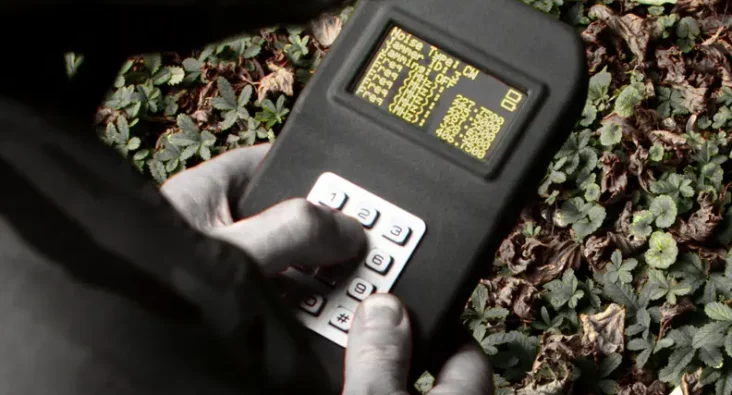
Winning the Invisible War: The Rise of Electronic Warfare
Forces must train to operate, fight, and command when the spectrum is contested.

Passive Radar for Detecting Aircraft Without Emitting
Passive radar aircraft detection without signal emission; solving direct path interference for silent, persistent air surveillance.
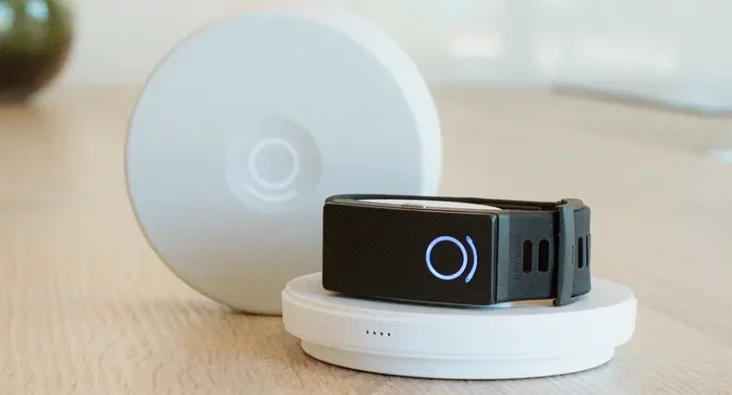
International Patent Grants for Pain Management Technology
Plextek engineers named as co-inventors on newly granted patents underpinning the first clinically validated, non-pharmaceutical wristband for chronic pain management
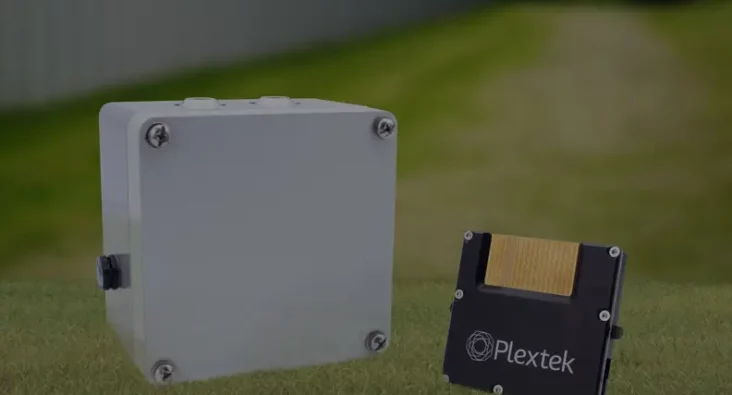
How technology transfer is reshaping sovereign security
From automotive to critical infrastructure, cross-sector technology transfer is reshaping our sovereign security
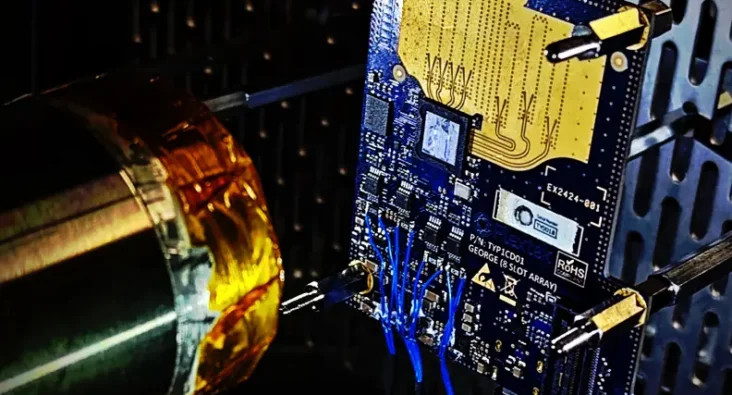
How Do You Radiation-Test a Complex IC?
Rigorous radiation characterisation is what makes the difference between a reliable device and one that fails unpredictably

Plextek Receives a King’s Award for Enterprise for Innovation 2026
Plextek has been honoured with a King's Award for Enterprise for Innovation

Why the Best RF Design Removes the Problem Entirely
Vlad Lenive, Lead RF Systems Engineer, brings 30 years of experience from Skynet 5 to sub-THz arrays. He talks HAPS, low-SWaP design, and why the best RF architectures eliminate components rather than shrink them.
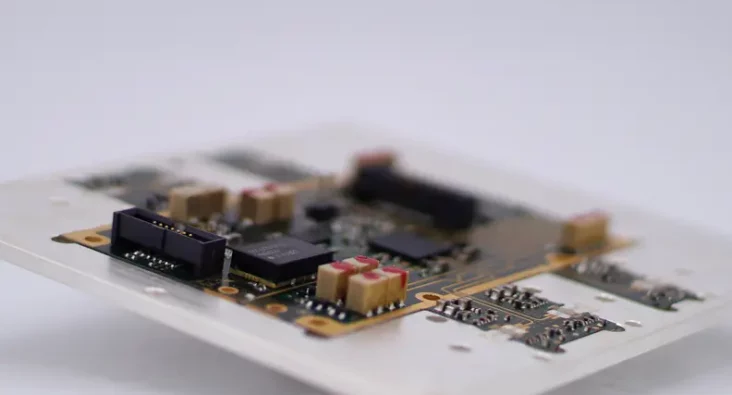
Designing sensing technology for space
Space radar has to survive radiation, shed heat without air, and work autonomously with no margin for error. Here's how the engineering trade-offs work.

Seeing Clearly in Orbit: The Turning Point for Space Radar
Richard Jacklin explores why 2026 is a turning point for compact radar in space, covering SAR, debris detection, 6G NTN communications and the UK skills gap.
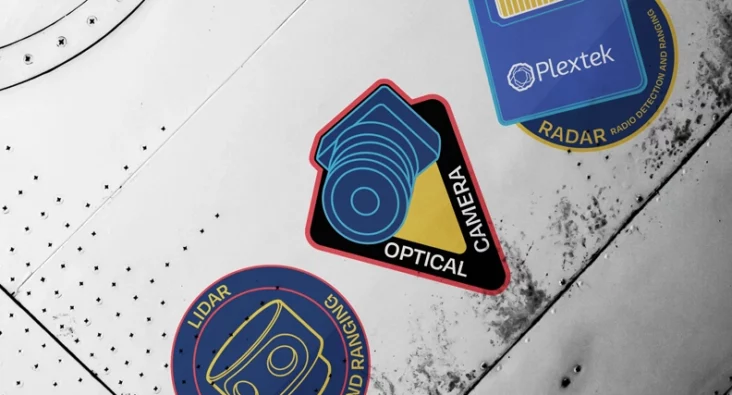
Radar in Modern Sensing: The Power of Sensor Fusion
Radar Sensor Fusion with Cameras and Lidar: Enhanced Sensing Technology for Autonomous Systems

mmWave radar: balancing resolution and practicality in space
mmWave radar offers the ideal balance for space applications, detecting small debris and spacecraft features with minimal power and no moving parts.
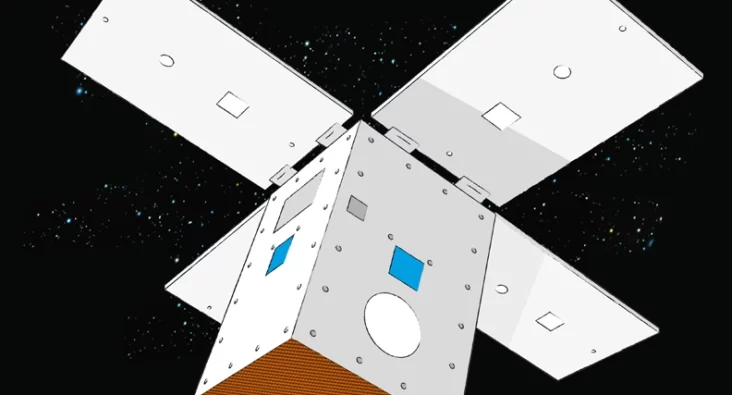
Beyond policy: how industry must deliver ESA’s Zero Debris Vision
Space needs to be kept clean, and this is becoming increasingly hard as commercial and defence activities ramp up.
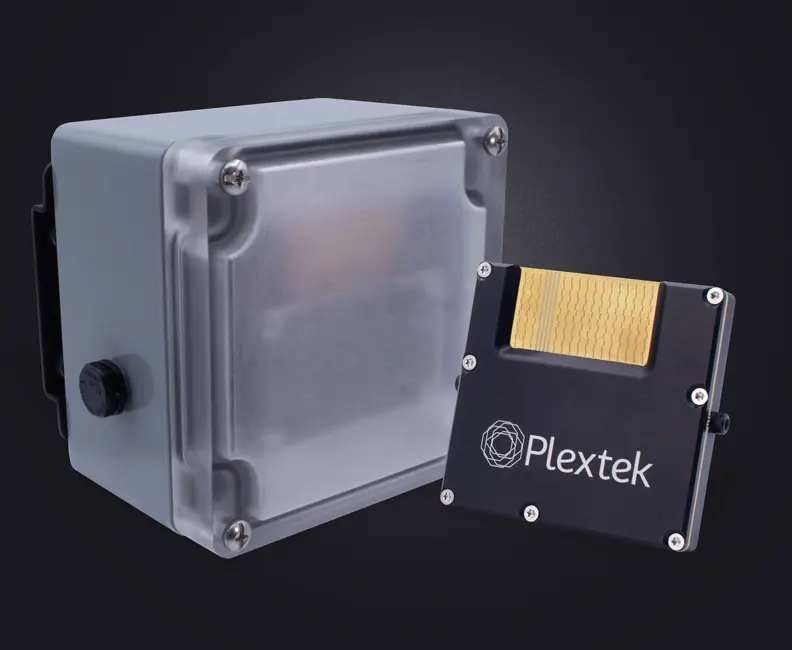
Autonomous Radar Networks for Critical Infrastructure Security
Our mmWave radar sensors integrated with AI-driven command and control to deliver autonomous, cost-effective security monitoring for UK nuclear decommissioning sites.
Read More
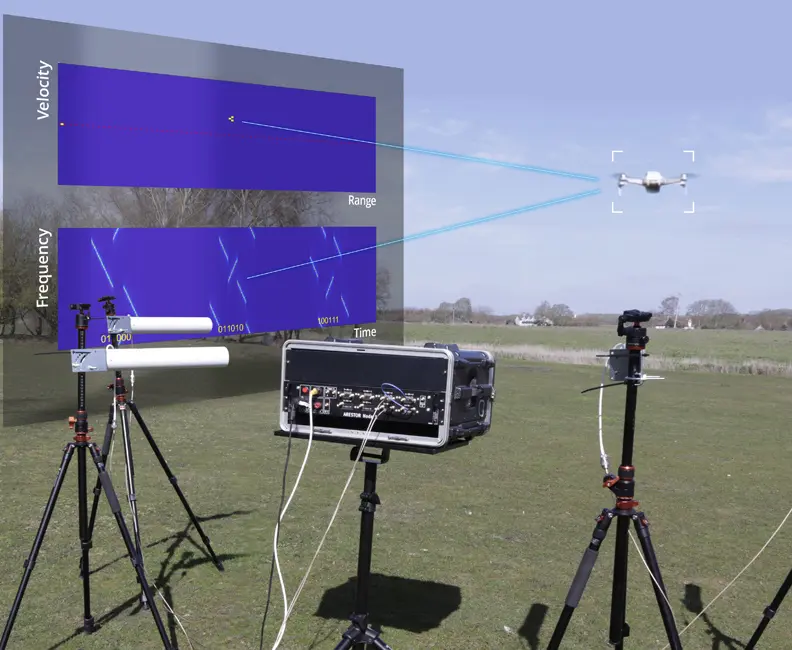
Integrated Sensing and Communication for FMCW Radar
Award winning frequency-hopping technique that embeds communication data into FMCW radar waveforms, enabling simultaneous sensing and data transmission from a single system.
Read More
Using AI to Detect and Classify RF Signals in a Congested Environment
Developing AI-based RF signal classification systems, from algorithm development through to embedded real-time processing solutions
Read More
Concealed object detection for real-time parcel security screening
Concealed object detection for real-time parcel security screening with mmWave sensor design and manufacture, and real-time AI processing
Read More
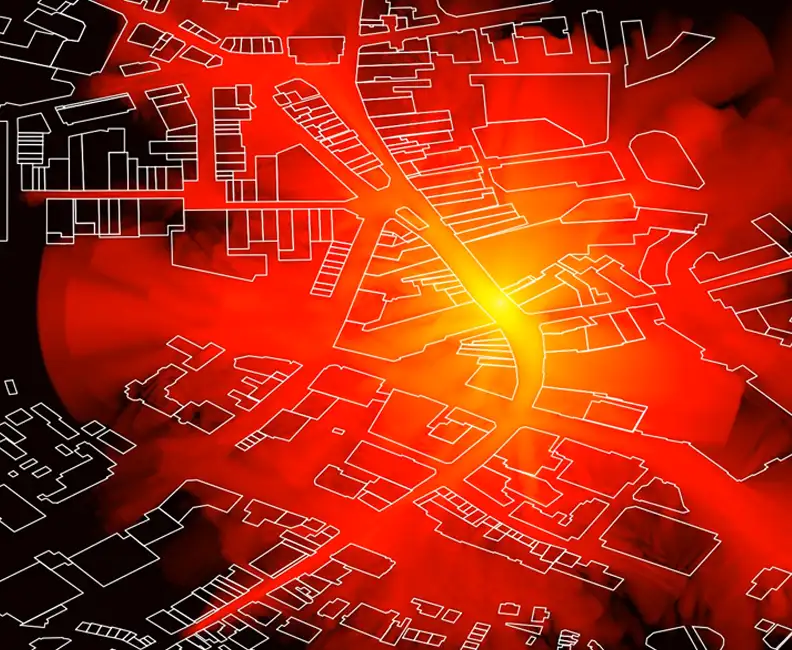
Machine Learning for Rapid Propagation Assessment
Developing a groundbreaking ML model for swift and efficient coverage prediction in complex urban environments, enabling rapid optimisation of transmitter locations on standard computing hardware.
Read More
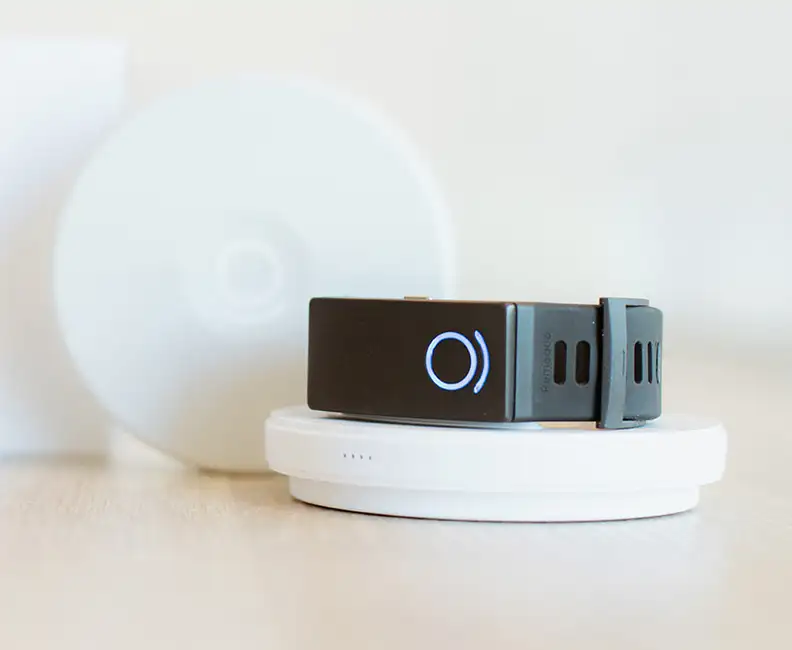
Cost-Effective Improvement in mmWave Intensity
Enhancing the mmWave antenna design for Remedee Labs, significantly boosting RF radiation efficiency and cost-effectiveness in non-pharmaceutical chronic pain treatment.
Read More

Game-Changing Radar for the CLEAR Mission
Developing vital radar technology for the CLEAR mission, advancing space debris removal techniques to safeguard operational satellites and spacecraft.
Read More
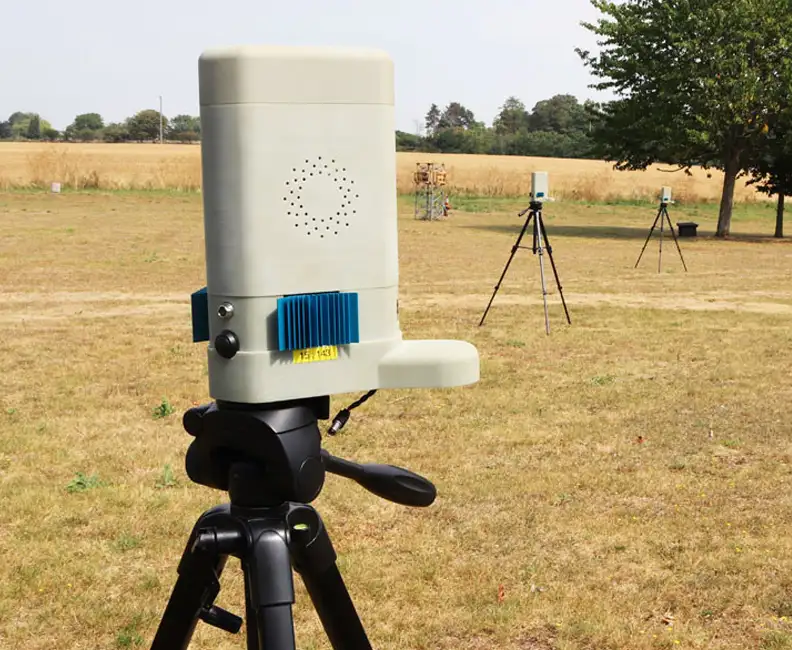
Future Sensing: Improving Mobile Ad-hoc Networks
Leading a transformative four-year research initiative to improve mobile ad-hoc networks through advanced directional antenna systems and cross-layer processing, significantly enhancing military communication capabilities.
Read More
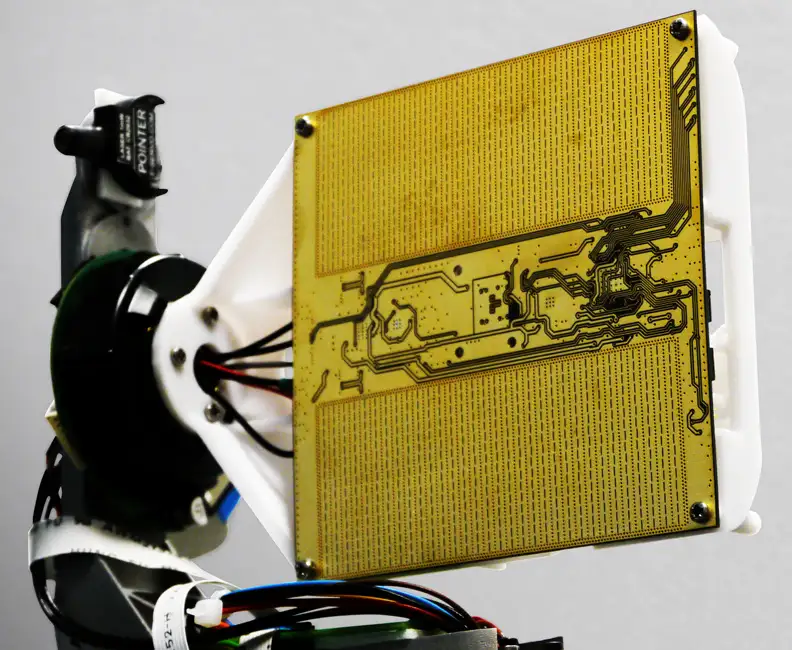
Millimetre-Wave Radar System
Expertly engineering a compact, high-performance 60 GHz millimetre-wave radar system using innovative Substrate Integrated Waveguide technology, achieving significant advancements in target detection up to 100 metres.
Read More
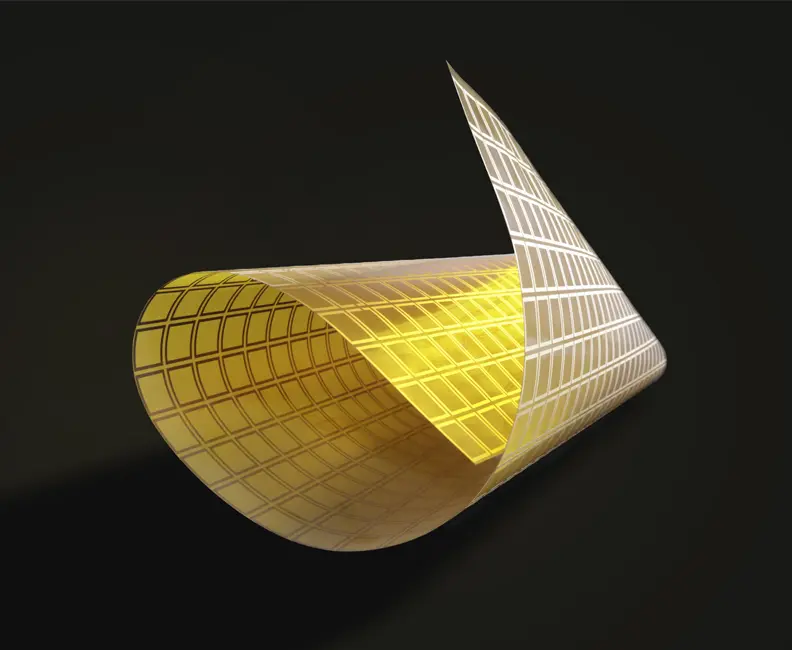
Communicating Across Surfaces
Using innovative expertise in metamaterials to facilitate the development of advanced surfaces, improving RF communication efficiency through pioneering surface wave technology for superior antenna design and wireless connectivity.
Read More
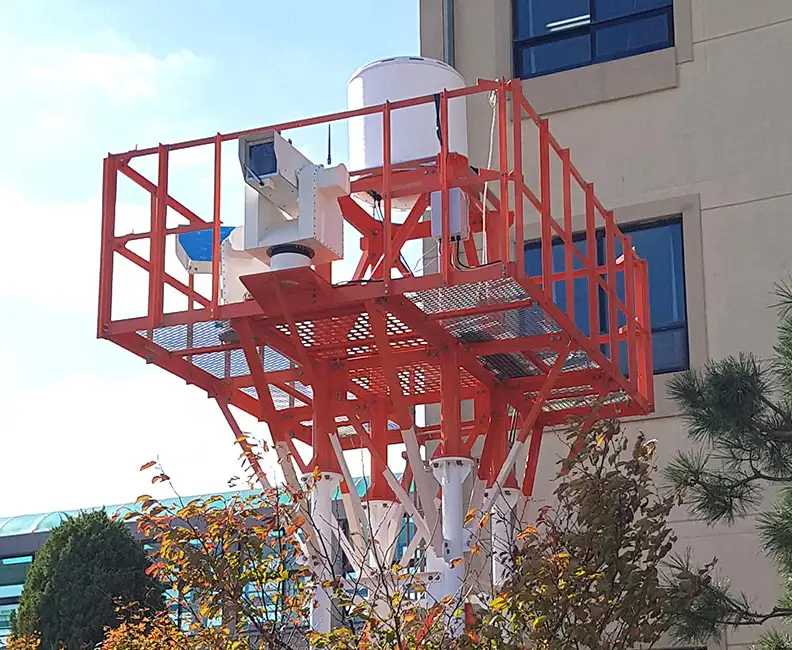
mmWave Radar for Foreign Object Debris Detection
Collaborating with WaveTech to develop an advanced mmWave radar system, enabling the rapid and automated detection of foreign object debris on runways, enhancing safety and operational efficiency at a South Korean airport.
Read More
Developing Automated Manufacturing Systems
Delivering a pioneering predictive maintenance solution for a global healthcare product company, utilising miniature battery-powered sensor systems to optimise automated production lines and significantly reduce costly downtimes.
Read More